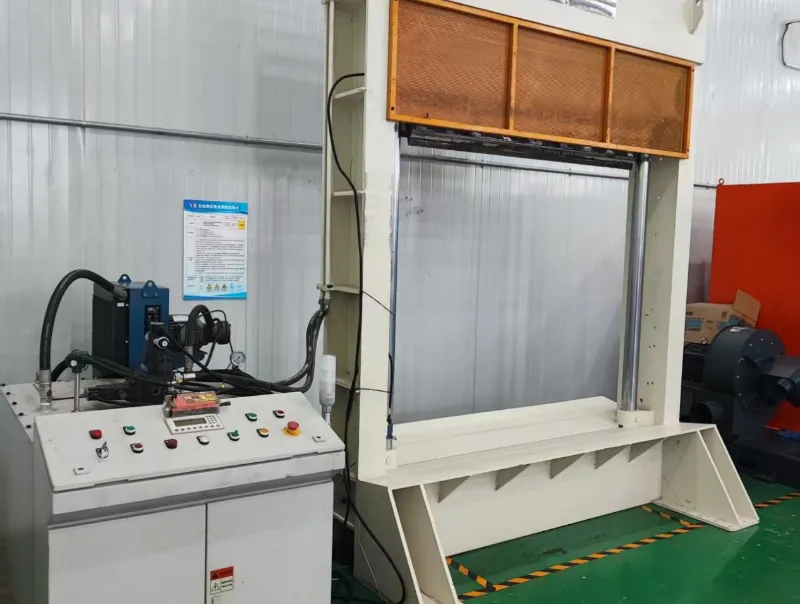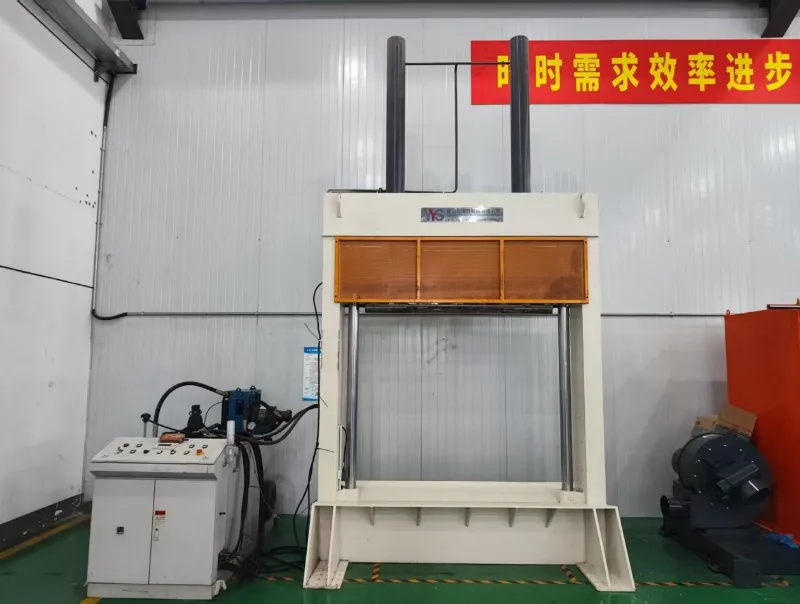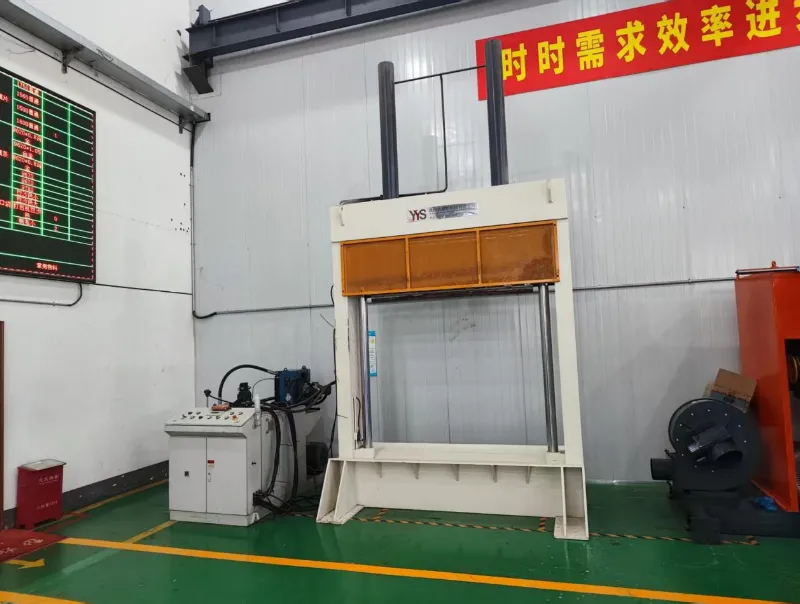
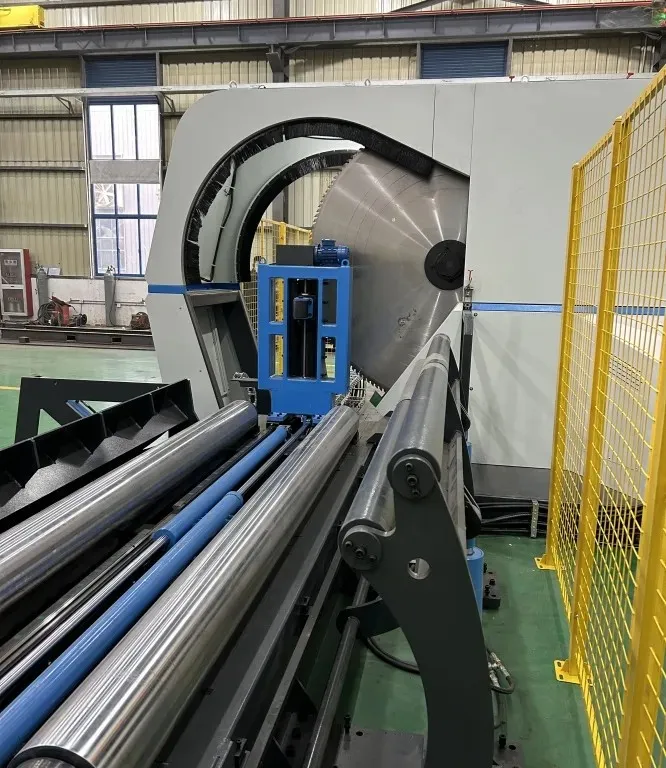
The Paper Roll Splitter, also known as a Roll Guillotine or Paper Reel Splitter, cuts waste, damaged and surplus paper rolls into smaller sections for easier handling, repulping and recycling. It features a 30-second compression time, a 2000 × 1400 mm feeding size and an optional loading tray.
This machine is designed for waste-roll recycling, not for producing precision finished rolls.
Main Characteristics
30-second cutting per roll – Ensures high-speed production efficiency with precise and consistent results.
Customizable for various roll sizes – Adapts effortlessly to different diameters and widths to meet diverse processing needs.
Optional loading tray – Simplifies material handling and transportation for improved workflow convenience.
Details
The Paper Roll Splitter is a heavy-duty hydraulic roll guillotine designed to cut waste, rejected and surplus paper rolls into manageable sections before recycling or repulping. It helps paper mills and recycling facilities process complete rolls that are difficult to feed directly into a pulper, shredder or baler.
Also known as a Paper Reel Splitter, Reel Splitting Machine or Paper Roll Guillotine, this equipment is suitable for processing damaged rolls, residual reels, butt rolls and off-spec paper rolls. The cutting size and handling configuration can be adapted to different roll dimensions and recycling workflows.
To receive a suitable configuration, provide the maximum roll width, roll diameter, roll weight, paper type and required split size.
| Model | Roll Splitter |
| Cylinder Specification | 180x130x1400mmx2 |
| Compression Time | 30s |
| LxWxH: | 2500x1950x4200mm |
| Feeding Size | 2000x1400mm |
| Weight | 6T |
| Power | 15kw |
| Voltage | 380V(3phase) |
| Loading Tray | Optional |
The table shows the standard configuration. Please provide the dimensions and weight of your largest paper roll so that the feeding size and loading arrangement can be confirmed before quotation.
A Paper Roll Splitter cuts complete waste rolls into smaller sections so that the paper can be handled and recycled more efficiently. Unlike precision converting equipment, it is not intended to produce finished narrow rolls for sale.
Typical materials processed include:
Damaged or rejected paper rolls
Surplus and obsolete paper reels
Residual and butt rolls from paper production
Rolls with damaged or collapsed cores
Off-spec packaging paper rolls
Waste rolls returned for repulping
Paper mill broke stored in roll form
After splitting, the paper sections are easier to transport, sort, remove from the core and feed into downstream recycling equipment.
The waste paper roll is moved into the feeding area. An optional loading tray can be used to improve positioning and simplify the handling of heavy rolls.
The hydraulic cutting system moves through the complete roll and divides it into smaller sections. The cutting arrangement can be selected according to the roll size and required output section.
The split paper sections are removed from the cutting area for further handling. Loading and unloading arrangements should be selected according to the roll weight and available factory space.
The resulting sections can be prepared for core removal, shredding, baling or direct transfer to a suitable pulping process.
For projects requiring conveyor-fed material handling, provide the factory layout and desired process flow for engineering evaluation.
Paper mills can use the Waste Paper Roll Splitter to process production waste, rejected rolls and residual reels before returning the material to the pulping system.
Paper rolls damaged during production, storage or transportation may no longer be suitable for normal converting. Splitting makes the material easier to recover and recycle.
Paper converters, packaging plants and printing facilities often accumulate obsolete grades, short rolls and surplus reels. A Paper Reel Splitter reduces these rolls to manageable sizes for recycling.
Complete rolls can be too large or tightly wound for downstream recycling machinery. Guillotine splitting prepares the material for more efficient subsequent processing.
The machine can support facilities processing waste rolls of packaging paper and compatible paperboard materials. Roll dimensions and material density should be confirmed during equipment selection.
The 30-second compression time supports faster handling than labor-intensive methods of breaking down waste rolls.
Dividing large paper rolls into smaller sections makes them easier to move, sort and feed into downstream recycling equipment.
Opening tightly wound rolls helps prepare the paper for subsequent fiber recovery and repulping.
A dedicated hydraulic paper roll guillotine provides a controlled industrial process for handling large waste rolls. The final operating and guarding arrangement should match the buyer’s factory requirements.
Roll dimensions, loading requirements and factory layout vary between paper mills. The equipment can be evaluated for different feeding and handling arrangements.
Choosing the correct machine depends on whether the roll will be recycled or retained as a usable product.
| Equipment | Main Purpose | Process | Output |
|---|---|---|---|
| Paper Roll Splitter | Process waste and rejected rolls | Hydraulic guillotine splits the complete roll | Paper sections for recycling or repulping |
| Paper Roll Saw | Resize or trim usable paper rolls | Circular saw or band saw cuts through the wound roll | Narrower paper rolls that remain usable |
| Slitter Rewinder | Produce precision finished rolls | Unwinds, slits and rewinds the material | Multiple accurately wound narrow rolls |
| Paper Core Cutting Machine | Cut empty paper tubes | Cuts paper cores to specified lengths | Short cores for winding finished products |
Choose a Paper Roll Splitter when the main objective is waste paper recycling. Choose a Paper Roll Saw when an intact paper roll must remain usable after resizing. Choose a Slitter Rewinder when precise web slitting, tension control and rewinding are required.
Different markets use different names for the same general type of recycling equipment:
Paper Roll Splitter: Common international and North American term
Roll Guillotine: Describes the guillotine-style cutting method
Hydraulic Roll Splitter: Emphasizes the hydraulic operating structure
Paper Reel Splitter: Common in the United Kingdom and European markets
Reel Splitting Machine: Common European industrial terminology
Waste Roll Cutter: Refers to cutting rejected or surplus rolls for recycling
These terms describe waste-roll processing equipment and should not be confused with a paper roll slitter or slitter rewinder used for precision converting.
The machine is suitable for:
Paper mills handling production waste and mill broke
Waste paper recycling facilities
Packaging paper and board manufacturers
Printing plants with rejected or obsolete paper reels
Paper converters processing surplus and damaged rolls
Recycling equipment distributors
Industrial waste-management projects involving rolled paper
Paper roll dimensions and recycling processes vary significantly between factories. Configuration can be evaluated based on:
Maximum paper roll width
Maximum roll diameter
Maximum roll weight
Paper grade and roll density
Required split size
Number of rolls processed per shift
Loading and unloading method
Optional loading tray
Factory voltage and frequency
Available installation space
Connection with existing recycling equipment
If you require a Paper Roll Splitter with a loading table, discharge arrangement or integration into a larger recycling process, submit the factory layout and material-flow requirements for technical review.
No. The Paper Roll Splitter is designed primarily for waste-roll processing, recycling and repulping preparation. To resize usable rolls while retaining the roll structure, consider a Paper Roll Saw. For precision slitting and rewinding, use a Slitter Rewinder.
A roll splitter uses a hydraulic guillotine to divide a complete waste roll into sections. A roll slitter normally cuts usable roll material into narrower widths, often as part of a converting process. The two machines serve different production purposes.
Yes. “Roll” is more common in North America, while “reel” is frequently used in the United Kingdom and Europe. Paper Reel Splitter, Reel Splitting Machine and Paper Roll Splitter can describe the same general equipment category.
The machine is intended for compatible waste, surplus, damaged and rejected paper rolls. The paper grade, roll density, maximum dimensions and weight should be confirmed before equipment selection.
The listed standard compression time is 30 seconds. Total processing capacity also depends on roll loading, positioning, cutting arrangement and unloading time.
Yes. A loading tray is available as an optional configuration to simplify roll positioning and material handling.
Different roll sizes and handling requirements can be evaluated. Submit the maximum roll width, diameter and weight so that the appropriate configuration can be confirmed.
The final price depends on machine size, roll capacity, loading arrangement, optional tray, electrical requirements and other customized features. A quotation should be based on the actual roll specifications and factory workflow.
If you are comparing Paper Roll Splitters for sale, selecting the machine only by overall dimensions or motor power may result in an unsuitable configuration. Roll diameter, width, weight, density and handling method must all be considered.
Send us your waste paper roll specifications and recycling process requirements. We will evaluate the application and recommend a suitable Hydraulic Paper Roll Splitter, Roll Guillotine or customized reel splitting configuration for your facility.
Customized Products
We offer comprehensive customization services that cover appearance, functionality, and configuration – please feel free to share your specific requirements.
Social Media
Social Media
Contact Us
+86 0512 5510 8067
Room 3, No.2159, Beimen Road, Yushan Town, Kunshan City, Jiangsu Province, China
Inquiry
Inquiry
News Center
October 23, 2026
October 23, 2026
Paper Roll Slitting Machine vs Guillotine Cutter: Which Is Better?

 RU